
 Grupo SENER
- The finalists presented their solutions to a panel of judges made up of both engineering and non-technical professionals.
- The project seeks to bring students closer to the disciplines specific to engineering, technology and science in general, and promote STEM careers.
Madrid, March 31, 2023 – Over the course of March, the Sener Foundation and the Sener engineering and technology group held the finals of the “A Challenge for Science” to promote scientific careers among young people and teens in schools. Specifically, three events were held in which the finalists from schools in Catalonia, the Basque Country and Madrid presented their solutions in response to the engineering challenges proposed.
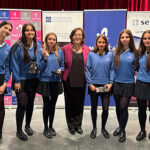
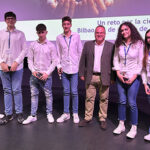
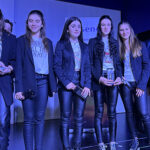
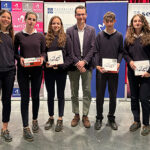
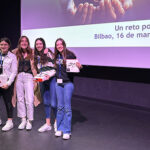
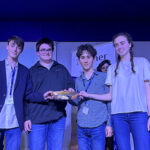
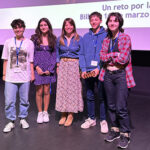
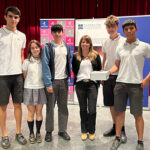
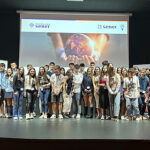
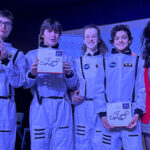
In total, 15 schools took part in this edition, responding to the challenges proposed involving the optimized use of fuel on ships, the philosophy of buying local, the use of data to improve transportation in cities, living on the Moon, surviving the Lunar night, clearing space junk and using the metaverse to improve health.
Final for schools in Catalonia
The event was held at the Colegio Internacional SEK and featured eight finalists from Instituto Els Tres Turons in Arenys de Mar, the Colegio Internacional SEK and Colegio Cristo Rey-Escolapios in Zaragoza.
The winning projects were, first, “The curiosity has landed” project, which addressed the challenge of building a lunar rover. Coming in second, in response to the buy local challenge, was a project on biodegradable coffee capsules. And, for the first time “A Challenge for Science” final, two third-place entries were given prizes due to the jury’s inability to decide which of two teams had best responded to the challenge of how to settle the moon.
The jury was made up of Sener employees Beatriz Bravo, Mireia Marco, Jaime López Calderón, Joan Manel Casalta and Eva Creus. All of them noted the quality of the presentations made by the students and the originality of the solutions proposed to the challenges.
For her part, the manager of this project at Sener, Oiane Niebla, said that: “The participants have made this one of the most creative finals; there were journalists, crisis teams, astronauts and even a coffee tasting.”
Final for schools in the Basque Country
The event was held at the Padre Andrés de Urdaneta school, with nine finalists taking place, from Colegio Vizcaya, Azkorri Ikastetxea, Lauaxeta Ikastola and the host school.
The winning projects were, in first place, the “Sunny Night” project from the students of Lauaxeta Ikastola, which responded to the challenge of surviving the lunar night. Second place went to the “Bio Vessel” project of the Colegio Vizcaya, which dealt with the challenge related to fuel optimization in ships. And just as in the final in Catalonia, the jury could not decide and two third place awards were presented, one to the “Lunver project” of Azkorri Ikastetxea, and the other to the” Alfa Centauri” project of Colegio Urdaneta, both of which addressed the challenge of building a lunar rover.
The Sener jury consisted of Juan Francisco Paz, Ixone López, Iñigo Colón and Janire Zabaleta. The final was also attended by Zaloa Campillo, manager of the Euskadi branch of the Association of Telecommunications Engineers. Ixone López underscored the “importance of contributions to projects from non-technical people, since their collaboration makes the projects more well-rounded and appealing.” Zaloa Campillo, meanwhile, highlighted “the relevance of projects in A Challenge for Science to promote scientific and technological vocations from an early age.”
Final for schools in Madrid
Lastly, the final in Madrid was held at the San José del Parque school and 14 featured finalists from Colegio Santa María de la Hispanidad, Colegio Árula, IES Parque de Lisboa, Thames School, Colegio Virgen de Europa, Colegio San José de Cluny, Colegio Nuestra Señora de la Merced and the host school.
In first place was the project “How to capture and deorbit space junk,” by the students of the Colegio Virgen de Europa, which, as its name suggests, sought to address the challenge of space junk. In second place, in response to the challenge of using the metaverse to improve health, was the “Anticipate the Future” project of the students of the Colegio San José del Parque. Third place went to the project from Colegio Árula, which responded to the challenge of building a lunar rover.
The Sener jury was made up of Felipe Pou, Andrés Culebras, Antonio Ayuso, César Chamorro, Joaquín Botella, Pilar Aragón, Raquel Medrano and David de la Fuente.
What is “A Challenge for Science”?
“A Challenge for Science” consists of presenting real engineering innovation challenges to secondary-school students that are tailored to their curriculums. The students then have to find solutions to the problems faced daily by an engineering company. Subsequently, the students’ solutions are evaluated by Sener personnel and other external collaborators with expertise in these areas of engineering.
In December 2022, “A Challenge for Science” received the Educaweb Award for Academic and Professional Guidance in the Companies category. It has also received the STEAM Euskadi Sariak seal, presented by the Department of Education of the Basque Government in collaboration with Innobasque, the Basque Innovation Agency.
 Descarga PDF